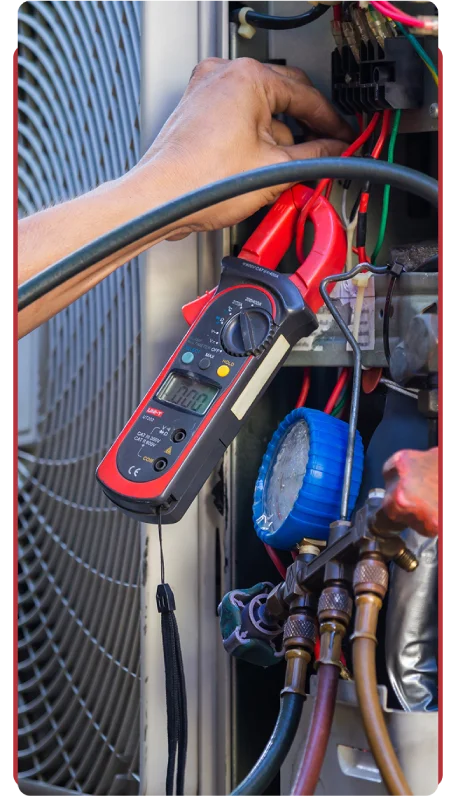
An air conditioner that’s properly maintained runs efficiently, costs less to operate, and lasts longer. At J&G Heating & Air Conditioning, our seasonal tune-ups catch small problems before they become expensive emergency repairs—dirty coils, low refrigerant charges, worn electrical connections, and airflow restrictions. A simple spring maintenance visit typically costs far less than an emergency July repair call.
Small issues found early—a slightly low refrigerant charge, a contactors showing early wear, a condenser coil starting to clog—can be addressed quickly and cheaply. Problems ignored turn into emergency repair calls in the middle of summer when you’re most uncomfortable and technician availability is lowest. Our maintenance tune-ups identify these early warning signs.
Our technicians hold NATE certification in air conditioning systems, meaning they’ve passed rigorous exams on refrigerant handling, electrical systems, compressor operation, and diagnostic procedures. They understand what “normal” looks like—normal pressures, normal temperatures, normal sounds—so they spot abnormal performance instantly. That expertise saves you from guessing whether a slightly warm coil or an unusual compressor hum is something to worry about.
When you schedule maintenance with J&G Heating & Air Conditioning, you’re not calling a national chain with rotating technicians. We’ve been family-owned since 1997, and we’ve maintained systems in your neighborhood for decades. Our reputation depends on keeping your system running well—we want you scheduling routine maintenance, not emergency repairs. That accountability means every visit is thorough and transparent.
Lancaster summers bring humidity and heat that stress cooling systems. Our spring tune-ups prepare your AC for the summer load—refrigerant top-off if needed, coil cleaning, contactor and capacitor testing, electrical connection tightening, and filter replacement. Fall tune-ups ensure your system shuts down cleanly and is ready for spring. These seasonal visits keep your system optimized year-round.
After each maintenance visit, you’ll have documentation of what was inspected, cleaned, tested, and replaced. This record is valuable if you need future repairs (your technician will know your system’s history), if you refinance or sell your home (buyers appreciate a well-maintained system), or if you ever need to make a warranty claim. You’ll know exactly what work has been done.
A standard AC tune-up has a flat cost—no hourly rate surprise, no upselling parts you don’t need. We’ll explain what’s included, perform the work, and provide a complete report. If we identify a part that’s wearing out and may need replacement soon, we’ll let you know and give you options. You control the scope.
Our Service Areas
AC Maintenance Service Across Lancaster County
J&G Heating & Air Conditioning provides seasonal maintenance for air conditioning systems across five communities in Lancaster County. Whether you need spring tune-ups before summer kicks in or fall maintenance before shutdown, we schedule appointments at your convenience and provide comprehensive service reports.
Communities We Serve:
Spring and fall maintenance appointments scheduled with short notice from our main office. Quick appointment availability and consistent technician service in our primary service area. More about Lancaster AC service →
Seasonal maintenance scheduled based on your preference. Just 10 minutes east of our office, Denver receives fast appointment availability and rapid dispatch if emergency repair is needed. More about Denver AC service →
Spring and fall tune-up appointments available. Northeast Lancaster County served by experienced maintenance technicians. Consistent service records maintained for systems in this area. More about Ephrata AC service →
Maintenance scheduling along the Route 30 corridor. South Lancaster area served with full diagnostic and seasonal tune-up capabilities. Regular maintenance helps prevent summer breakdowns. More about Columbia AC service →
Year-round maintenance appointments available. North-central Lancaster County served by technicians familiar with local homes and systems. Seasonal maintenance schedules tracked for customer convenience. More about Lititz AC service →
Our Process
Our AC Maintenance Process
Every AC maintenance visit we do follows the same proven process — designed to catch problems early, improve efficiency, and keep your system running reliably. Tap any step below to see exactly what happens.
Our technician arrives at your scheduled appointment and begins with a complete visual inspection of both indoor and outdoor units. They look for obvious signs of wear, damage, corrosion, loose wires, or pest intrusions—anything that signals a problem developing. They check the thermostat for responsiveness, verify the indoor unit isn’t leaking water, inspect the outdoor unit for debris or vegetation restricting airflow, and check the condensate drain line for blockages. This rapid visual pass often reveals maintenance issues before we run any diagnostics.
Our team has been performing this same detailed inspection for Lancaster County customers since 1997, and we’ve refined our maintenance protocols based on real-world experience with every climate condition Pennsylvania throws at us.
Visually inspect indoor and outdoor units for signs of corrosion, moisture, loose components, or pest intrusion
Check thermostat display and control wiring for responsiveness and any error codes
Verify indoor unit condensate drain is clear and water is flowing properly (no pooling or backup)
Inspect outdoor unit for debris, vegetation, or damage that restricts airflow
Feel the refrigerant lines (indoor should be cold, outdoor should be warm) to verify active cooling
Check electrical power at thermostat and contactor to confirm voltage supply
A clogged filter reduces cooling efficiency and forces your compressor to work harder, wasting energy and shortening system life. We replace your air filter with a clean one rated for your blower and return-air ductwork. We also clean the indoor evaporator coil (where your AC removes humidity and heat from air passing through your home) and the outdoor condenser coil (where heat is rejected to the outside). Dirty coils restrict airflow and heat transfer, forcing longer run times and higher energy bills.
This cleaning step alone typically improves efficiency by 10–15%.
Replace main return-air filter with new, properly-rated filter matching your furnace or air handler
Clean indoor evaporator coil using appropriate cleaner to remove dust, mold, and algae without damaging fins
Clean outdoor condenser coil using gentle water pressure or compressed air to remove dirt, leaves, and debris
Check and clear condensate drain line pan of any algae or blockages that slow water drainage
Inspect blower motor and fan blades for dust accumulation and clean as needed
Low refrigerant signals a leak—the system won’t cool properly and the compressor will overheat. We connect pressure gauges to the low-side and high-side service ports and record the readings. We compare these against manufacturer specifications for your system design and current outdoor temperature. Abnormal pressure readings tell us whether the refrigerant charge is correct, slightly low, or critically low. If low, we perform a detailed leak inspection before recommending a refrigerant top-off or system repair.
Correct refrigerant charge is essential—too little and cooling capacity drops; too much and the compressor risks damage.
Connect refrigerant pressure gauges (low-side and high-side) to service ports and record baseline pressures
Compare readings against manufacturer specifications adjusted for ambient temperature and system design
Measure temperature at evaporator coil (indoor) and condenser (outdoor) to calculate superheat and subcooling
If pressures are abnormal, perform electronic leak detection on accessible joints and tubing
If low refrigerant is confirmed, recommend leak location and repair options before refrigerant top-off
Electrical failures are common reasons for AC breakdowns. We test the contactor (the electrical relay that engages the compressor), the run capacitor (which stores charge to start the fan and compressor), the thermostat control wiring, and all major electrical connections. Using a multimeter and capacitor tester, we verify that voltage is correct, capacitors are holding charge, and there are no loose connections. Corrosion or oxidation on electrical connections can prevent proper power flow and cause intermittent failures.
We tighten any loose connections and clean corrosion.
Test contactor continuity and look for pitting or arcing on electrical contacts (sign of imminent failure)
Test run capacitor with dedicated capacitor tester to verify it’s holding proper electrical charge
Check all electrical connections at compressor terminals, contactor, and outdoor disconnect for corrosion or looseness
Test thermostat control wiring (R, G, Y, W, etc.) for proper voltage signal and continuity
Verify voltage supply at outdoor unit disconnect switch matches manufacturer specification
Tighten any loose terminals or connections and apply dielectric grease to prevent future corrosion
A healthy compressor hums consistently and maintains proper discharge pressure; a failing compressor may overheat, cycle irregularly, or draw abnormally high amperage. We listen to the compressor during operation for unusual sounds (grinding, squealing, or irregular cycling), measure amperage draw (electrical current consumed), and monitor temperature at the compressor discharge line. A compressor running hot or drawing excess amps is showing early signs of wear and may need replacement soon.
This test helps predict failures before they happen.
Listen to compressor during operation for normal hum versus unusual grinding, squealing, or rattling
Measure electrical amperage draw on compressor startup and running load (should be within manufacturer specs)
Feel compressor discharge line temperature during operation—should feel very warm but not burning-hot
Verify compressor oil level through sight glass if equipped (older systems)
Record all readings for comparison at next maintenance visit (trending helps predict future failures)
We Service all of the Industries Top Equipment and Install these Trusted Brands
Make Your Comfort Upgrade Affordable with Flexible Financing Options
We believe every homeowner in Lancaster County deserves access to reliable heating and cooling — regardless of budget. That’s why J&G Heating & Air Conditioning partners with trusted financing providers to offer flexible payment plans that fit your financial situation. Whether you’re replacing an aging boiler, upgrading to a high-efficiency air conditioning system, installing a high-efficiency heat pump, or investing in a new generator system, financing allows you to enjoy the comfort you need today while spreading payments over time.
Our team will walk you through every available option during your free estimate, helping you understand monthly payment amounts, interest rates, and approval requirements. We want the financial side of your project to feel just as comfortable as the temperature in your home.
What Are the Benefits of Financing?
Keep your emergency fund intact while still investing in a high-quality HVAC system. Financing lets you upgrade your comfort without depleting your savings account, giving you financial flexibility and peace of mind.
Don’t wait for your next paycheck or tax return. With financing in place, you can replace an aging system or upgrade today — and start enjoying reliable comfort right away.
Financing puts higher-efficiency equipment within reach. Better systems mean lower energy bills, longer equipment life, and more reliable comfort — benefits that pay off year after year.
Fixed monthly payments make it easy to budget for your project. No surprises, no hidden fees — just a clear path to comfort that fits your household’s finances.
Wells Fargo
As an authorized Wells Fargo financing partner, J&G Heating & Air Conditioning offers a range of credit options to help you manage the cost of your new heating or cooling system. With competitive rates and flexible terms, qualifying homeowners can enjoy convenient monthly payments that fit comfortably into their household budget.
Through our partnership with PowerPay, we provide another trusted financing pathway for Lancaster County homeowners ready to upgrade their home comfort. PowerPay’s streamlined application process and flexible repayment plans make it easy to get started on your project without delay.
GoodLeap offers flexible financing options and competitive rates, making it easy for homeowners to invest in high-efficiency heating, cooling, and generator systems. With a simple application process and a variety of repayment terms, upgrading your home comfort doesn’t have to mean a large upfront cost.
When you join one of our maintenance programs, you’ll receive scheduled tune-ups performed by our NATE-certified technicians who know your system inside and out. We’ll clean critical components, check refrigerant levels, inspect electrical connections, test safety controls, and ensure everything is operating as it should.
Regular maintenance doesn’t just prevent breakdowns — it also helps lower your energy bills and protects your manufacturer warranty coverage. It’s one of the smartest investments you can make in your home’s comfort and your family’s safety.
Our Maintenance Plans Include:
Receive professional inspections and tune-ups for your heating and cooling systems each year, ensuring your equipment is ready before the season’s first extreme temperature day.
As a maintenance plan member, your service requests jump to the front of the line — so you spend less time waiting on a fix and more time enjoying a comfortable home.
A clean, well-tuned system uses less energy to deliver the same comfort. Members typically see lower monthly utility bills and a smaller carbon footprint year-round.
Catching small issues early prevents major breakdowns and extends the life of your HVAC equipment — protecting both your comfort and your investment.
We recommend annual maintenance—ideally in spring before cooling season begins. A spring tune-up prepares your system for summer demand and is the best time to catch winter-related issues. Some customers also book fall tune-ups before the system shuts down for winter. For commercial systems with higher run hours, twice-yearly maintenance is ideal.
Our standard tune-up includes filter replacement, indoor and outdoor coil cleaning, refrigerant pressure testing, electrical connection inspection and tightening, capacitor and contactor testing, thermostat check, condensate drain verification, and a detailed written report. Most tune-ups take 1–2 hours depending on system age and condition.
Maintenance significantly reduces the likelihood of breakdown, but no system is failure-proof. Electrical components can fail suddenly, manufacturing defects in parts sometimes show up after years of use, and accidents happen (animals chewing wires, lightning strikes). Regular maintenance catches 80–90% of developing problems early, but maintenance is preventive, not 100% guaranteed against all failures.
Yes. Our maintenance plan includes automatic spring and fall tune-ups, priority emergency repair dispatch if breakdowns occur, and discounted parts and labor on repairs. Members save on service costs and enjoy peace of mind knowing their system is regularly inspected.
Yes. Filter changes depend on your home’s dust levels and air quality—typically every 30 days for standard 1-inch filters, or every 90 days for premium pleated filters. Clogged filters reduce efficiency and can damage the blower motor and compressor over time. We can set up a filter delivery subscription if you’d like, or show you how to check and change filters yourself.
We’ll explain what we found, why it matters, and what your options are. Some issues are urgent (low refrigerant, failed capacitor); others are warnings about wear (compressor showing higher-than-normal amps, slight corrosion on connections). We give you honest recommendations and let you decide whether to repair now or monitor the situation and address it later if it worsens.
Annual maintenance is far less expensive than an emergency repair. A standard tune-up is affordable and straightforward compared to emergency repairs. Emergency calls involving compressor failure, refrigerant leaks, or electrical issues typically cost significantly more. Preventive maintenance is the smart financial choice.
For most homeowners, annual spring maintenance is sufficient. If you use your AC year-round or have a larger system with high run hours, twice-yearly maintenance (spring and fall) provides better protection. Our team can recommend the best schedule for your specific usage patterns.
Yes. You can book maintenance appointments through our website or by calling 717-872-6994. We typically schedule spring tune-ups with 2–4 weeks notice, but can often fit in appointments sooner during off-peak times.
Systems without regular maintenance typically develop efficiency losses, higher energy bills, shortened lifespan, and a higher likelihood of emergency breakdowns. An unmaintained 10-year-old system might fail suddenly without warning; a well-maintained 10-year-old system often runs another 5–10 years with confidence.
Let’s Get Started
Schedule Your AC Tune-Up This Spring
Regular maintenance is the simplest way to extend your AC’s life, improve its efficiency, and reduce the risk of emergency breakdowns when you need it most. Lancaster County families have trusted J&G Heating & Air Conditioning for seasonal maintenance since 1997—we know what it takes to keep systems running in Pennsylvania’s hot, humid summers.
Join our maintenance plan. Get automatic spring and fall tune-ups, priority emergency repair service, and discounts on maintenance parts and labor. Members enjoy the peace of mind that comes with regular professional care. Join our maintenance plan today for priority service and automatic seasonal tune-ups.
If your system breaks down despite maintenance, emergency repair is available Mon–Sun, 6:00 AM–10:00 PM (after-hours fee applies), with same-day service.
Don’t wait until July. Maintenance takes 1–2 hours and could save you thousands in emergency repair costs. Check our current specials and rebates to see if you qualify for additional savings on tune-up service.