Expert Geothermal System Repair & Diagnostics for Lancaster County
A geothermal system that loses heating or cooling efficiency, cycles on and off constantly, or stops working entirely requires specialized diagnostic knowledge. Geothermal systems operate on principles different from conventional furnaces or air conditioners—they involve ground loop pressures, refrigerant circuits, and heat exchanger performance that most technicians don’t understand well enough to diagnose accurately.
J&G Heating & Air Conditioning specializes in geothermal system repair. Our factory-trained technicians hold NATE certification in heat pump operation and understand ground-source heat pump diagnostics from refrigerant charge to ground loop integrity. We use professional test equipment to pinpoint problems accurately—eliminating guesswork and unnecessary parts replacement.
Why Lancaster Homeowners Trust J&G Heating & Air Conditioning for Geothermal Repair
When you’re dealing with a geothermal system that’s not heating or cooling properly, the contractor matters as much as the equipment. Our experience, manufacturer certifications, and specialized diagnostic equipment all add up to one thing: accurate diagnosis and effective repair the first time, backed by people who understand ground-source heat pump technology.
Get Your Geothermal System Repaired
What Sets Our Geothermal Repair Apart?
Not all HVAC technicians understand geothermal systems. Many treat them like conventional heat pumps—missing the critical ground loop component that makes geothermal unique. Our technicians have studied ground-source heat pump operation, completed factory training on the equipment we service, and diagnosed hundreds of geothermal problems across Lancaster County. We understand refrigerant circuits, ground loop thermal characteristics, compressor operation, and system controls specific to geothermal. That expertise prevents recommending expensive parts that don’t actually solve the problem.
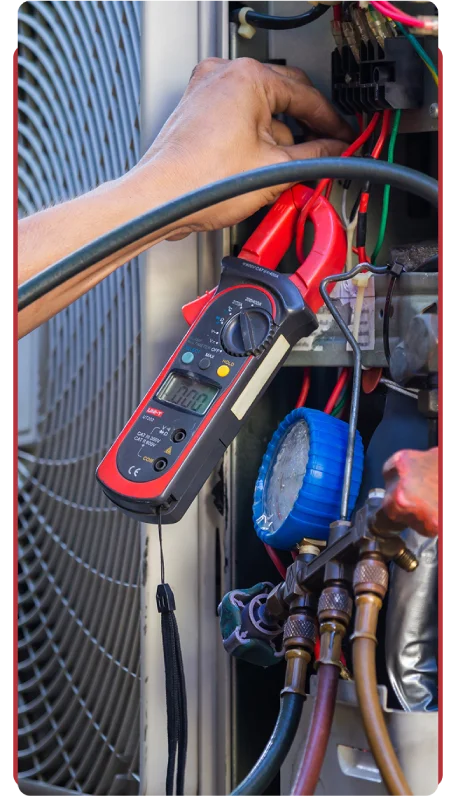
A geothermal system losing heating capacity could be low refrigerant charge, a ground loop circulation problem, compressor inefficiency, or thermostat control failure. Guessing wrong costs you money on unnecessary repairs. We use proper diagnostic tools: manifold gauges measuring refrigerant pressures, clamp meters for electrical current draw, thermometers measuring heat exchanger performance, and ground loop pressure/flow testing equipment. These objective measurements tell us exactly what’s wrong, not just what’s broken. That precision prevents wasted parts and ensures the repair actually solves the problem.
Our technicians hold NATE certification specific to heat pump operation, including geothermal systems. NATE certification requires passing rigorous exams on refrigerant chemistry, system controls, electrical operation, and diagnostic procedures. Beyond certification, we’ve completed factory training on the geothermal equipment we service—understanding manufacturer-specific control sequences, commissioning procedures, and efficiency optimization. That training means we know exactly how your system should operate and can spot deviations from normal behavior.
Many HVAC shops see few geothermal systems and lack expertise diagnosing them. A technician unfamiliar with geothermal might recommend an expensive compressor replacement when the actual problem is insufficient ground loop circulation. Or they might add refrigerant without testing whether low charge was the root cause. These mistakes cost you hundreds or thousands in unnecessary repairs. Our geothermal expertise ensures the diagnosis is correct the first time.
We don’t test in isolation. We test the complete system: ground loop pressure and flow, refrigerant circuit pressures and superheating, compressor operation and discharge temperature, electrical connections and safety devices, and thermostat/control board communication. Complete testing reveals whether the problem is ground-loop-related, refrigerant-related, compressor failure, control failure, or something else. That comprehensive approach prevents missing secondary problems that complicate repairs.
When we diagnose your geothermal system, we explain clearly what we found, why it’s causing the problem you’re experiencing, and what repair or replacement makes economic sense. If repair is reasonable, we quote it with clear labor and parts costs. If replacement is the better investment, we explain that too—without pressure, just honest advice. You decide what to do with complete information.
Our Service Areas
Geothermal Repair Service Across Lancaster County
J&G Heating & Air Conditioning provides expert geothermal repair across all of Lancaster County. Our factory-trained technicians bring specialized diagnostic knowledge and proper test equipment to every service call. Whether your system needs simple thermostat replacement or complex compressor diagnosis, we deliver accurate diagnosis and professional repair.
Communities We Serve:
Geothermal repair from our Conestoga headquarters. Scheduling based on your preference available for diagnostics and repair. Priority scheduling for emergency situations. More about Lancaster geothermal service →
Geothermal system repair just 10 minutes east of our office. Quick dispatch and experienced technicians familiar with this area’s systems. More about Denver geothermal service →
Professional geothermal repair for northeast Lancaster County. Expert diagnostics and factory-trained technicians for all system types. More about Ephrata geothermal service →
Geothermal repair service on the Route 30 corridor. Complete diagnostic testing and reliable repair of all ground-source systems. More about Columbia geothermal service →
Geothermal expertise for north-central Lancaster County systems. Professional diagnosis and repair with warranty coverage. More about Lititz geothermal service →
Warning Signs
Signs Your Geothermal System Needs Professional Repair
Geothermal systems are reliable, but when problems develop, they require specialized diagnosis. Here are the most common warning signs that indicate your system needs professional attention.
System Won’t Heat or Cooling Output Drops Significantly
Your thermostat is calling for heating or cooling, but the system produces little to no temperature change. Causes include: low refrigerant charge (most common), a stuck compressor valve, ground loop circulation failure, or thermostat not signaling the compressor. A ground loop leak slowly losing refrigerant is a common culprit in older systems.
System Cycles On and Off Frequently (Short-Cycling)
The compressor runs for 5–10 minutes, then shuts off and repeats constantly instead of running steadily for 20–30 minutes. Short-cycling causes temperature swings and wastes energy. Causes include: refrigerant overcharge, air in the refrigerant line, thermostat calibration drift, or compressor reaching unsafe pressure.
Unusual Noises: Hissing, Gurgling, Grinding
Hissing signals refrigerant escaping a leak. Gurgling means air trapped in the refrigerant or ground loop circuit. Grinding suggests compressor bearing wear or internal damage. These noises indicate problems worsening if ignored. We pressure-test all connections to locate leaks and test compressor operation to assess bearing condition.
Ground Loop Circulation Problem
The compressor runs but the ground loop isn’t circulating heat transfer fluid properly. You notice this if heating/cooling output is weak despite normal compressor operation. Causes include: ground loop clogged with ice (in winter), pump failure, or internal blockage in the loop. We measure ground loop pressure and flow to diagnose circulation problems.
Thermostat Not Responding to System
You adjust the thermostat but the compressor doesn’t respond, or it cycles without respecting the setpoint. Causes include: thermostat wiring broken, thermostat miscalibrated, or control board failure. We test thermostat signals using a multimeter to confirm the thermostat is actually sending command signals to the compressor.
Water Leaking From Indoor Unit
Water pooling around the indoor equipment signals a blocked condensate drain (in cooling mode) or a refrigerant leak that’s leaking into the condensate pan. A blocked drain is minor—we clear it. A refrigerant leak requires pressure-testing to locate the leak site and brazing to seal it.
Our Process
How We Diagnose & Repair Geothermal Systems
Every geothermal repair we do follows the same proven diagnostic process — designed to identify the root cause accurately and deliver a repair that actually solves the problem. Tap any step below to see exactly what happens.
You describe what’s happening: “The heat pump won’t heat despite the thermostat calling for it” or “The system cools fine but heating output is weak.” We ask clarifying questions: “When did this start?” “Have you noticed any sounds?” “Has the system been worked on recently?” We also review your system’s maintenance history—previous repairs, any work done, and parts replaced—to understand what problems may have developed before.
This conversation informs our testing strategy—we’ll focus diagnostic tests on the most likely causes based on your symptoms and history.
Listen carefully to your description of the problem
Ask clarifying questions about when the problem started and what changes you’ve noticed
Review system maintenance history and any previous repair work
Understand your expectations for heating/cooling performance
Note any sounds, odors, or unusual behavior you’ve observed
Discuss any recent power outages or thermostat changes that may have triggered the problem
We observe your system: external equipment condition, evidence of leaks or corrosion, piping routing, and overall system appearance. We check the thermostat—verifying it’s set to the right mode and setpoint. We also listen while the compressor runs: normal operation is a steady hum; grinding or squealing indicates mechanical problems.
Visually inspect indoor equipment for leaks, corrosion, or damage
Check outdoor ground loop circulator pump for operation and unusual sounds
Listen to compressor operation during startup—normal is steady hum, abnormal is grinding/squealing
Measure current room temperature and compare to thermostat setpoint
Note any fault codes displayed on equipment or thermostat
We connect manifold gauges to the system’s service ports—measuring high-side pressure (compressor discharge) and low-side pressure (compressor inlet). These pressures tell us whether refrigerant charge is correct, too low, or too high. For heating mode: normal pressures depend on outdoor ground temperature and system capacity, but specific values guide our assessment. For cooling mode: similar pressure patterns reveal charge status. If pressures are abnormal, we measure superheat (temperature above saturation point)—the gold standard for confirming refrigerant charge accuracy.
Connect manifold gauges to high-side and low-side service ports
Record refrigerant pressures while system runs in both heating and cooling modes
Measure superheat at the compressor inlet using temperature probe
Compare measured pressures and superheat to manufacturer specifications
Identify whether refrigerant charge is correct, low, or high
If low, this indicates a refrigerant leak somewhere in the system
We measure ground loop pressure and flow using a specialized testing port (if equipped). Low pressure indicates a circulation problem—pump failure or blockage. We also measure temperature at the ground loop inlet and outlet; temperature difference indicates whether heat transfer is occurring or if circulation is blocked. If ground loop flow is poor or pressure is low, we evaluate whether the problem is pump failure, internal loop blockage, or ice formation (in winter). This testing is critical—many geothermal problems originate in the ground loop, not the compressor.
Measure ground loop fluid pressure at the circulation pump outlet
Measure temperature at ground loop inlet and outlet
Calculate flow rate from pressure drop and known system characteristics
Compare to design specifications to assess if circulation is adequate
Test pump operation: electrical current draw and vibration indicate bearing condition
If circulation is poor, determine whether problem is pump, blockage, or freeze
We measure compressor discharge temperature—how hot the refrigerant leaves the compressor. High discharge temperature indicates excessive compression (possibly refrigerant overcharge) or high ground loop temperature (in summer). Low discharge temperature suggests insufficient compression (possibly low refrigerant charge) or failing compressor. We also measure compressor electrical current draw during startup and steady-state operation. High current draw suggests mechanical stress; low draw suggests compressor not operating at full capacity.
Measure refrigerant discharge temperature at compressor outlet
Compare discharge temperature to normal operating range
Measure electrical current draw during compressor startup (locked rotor current should spike briefly)
Measure steady-state electrical current during normal operation
Compare to rated current values to assess compressor health
High or abnormal current draw indicates mechanical problems inside the compressor
We test the thermostat control signal—using a multimeter to verify that when the thermostat calls for heating or cooling, a 24-volt signal reaches the compressor control board. If no signal is present, the thermostat or control wiring is broken. If the signal is present but the compressor doesn’t respond, the control board may be failing. We also verify that all safety controls—high-pressure switch, low-pressure switch, thermal overload—are responding correctly.
Measure 24-volt control voltage at thermostat when calling for heating/cooling
Verify voltage reaches the compressor control board correctly
Test safety devices: high-pressure switch, low-pressure switch (manually or by observation)
Verify thermostat responds to temperature changes without hunting or overshoot
Test any auxiliary heat (if equipped) to confirm electric resistance heater operation
Check for any fault codes or error messages on control displays
Once we’ve diagnosed the problem, we perform the repair: Refrigerant leak: locate with UV dye or electronic leak detector, braze the leak, evacuate the system, and recharge. Low refrigerant charge: add the correct amount of refrigerant matched to manufacturer specifications. Ground loop circulation failure: replace pump, clear blockage, or address freeze (thaw and add freeze protection). Compressor failure: replace compressor (major repair, but necessary for system recovery). Control board failure: replace board and reprogram control settings. Thermostat failure: replace thermostat and verify new unit communicates with compressor.
After repair, the system is restarted and monitored: pressures are verified normal, temperatures at all points are measured, and the system is allowed to run through complete heating and cooling cycles to confirm reliable operation.
Perform repair following manufacturer procedures exactly
Use manufacturer-approved parts and refrigerants matched to original specifications
Evacuate system properly if refrigerant lines were opened (remove air and moisture)
Recharge with exact amount of refrigerant per manufacturer specifications
Pressure-test all repairs to confirm no new leaks
Restart system and verify normal operation at all test points
After repair, pressures are verified returning to normal, temperatures are measured at all critical points, and the system is cycled through heating and cooling to confirm reliable operation. We document all test results and explain what we found, what we repaired, and what the repair involved. You receive a service report with: repair description, parts replaced, labor time, warranty terms (parts and labor), and explanation of what failed and why. We also provide our emergency contact number for questions during the first days of operation.
Run system through complete heating and cooling cycles
Verify all pressures, temperatures, and electrical readings are normal
Confirm thermostat responds correctly to setpoint changes
Test safety controls one final time before leaving
Provide written service report with repair description and test results
Explain repair clearly: what failed, why it failed, what we did to fix it
Discuss prevention: how maintenance could have caught this early
Provide emergency contact information and warranty terms
Common Repairs
Common Geothermal Repairs We Handle
Our technicians are experienced in all types of geothermal system repairs, from simple thermostat issues to complex compressor replacement. Here are the most common repairs we perform.
Low Refrigerant Charge & Leak Location
A slow refrigerant leak reduces cooling capacity gradually. We locate the leak using UV dye (UV light reveals dye-marked refrigerant) or electronic leak detectors. Once located, we braze the connection, evacuate the system, and recharge. Typical repair time: 2–3 hours.
The circulator pump moves heat transfer fluid through the ground loop. A failed pump stops circulation, making the system unable to exchange heat efficiently. Replacement usually takes 1–2 hours and immediately restores performance.
The compressor is the system’s heart. A failed compressor means the system cannot cool or heat. Compressor replacement is the most involved repair (4–6 hours) and one of the most expensive. We only recommend replacement when the compressor has genuinely failed, not as a preventive measure.
A leak in buried ground loop piping causes gradual refrigerant loss and pressure drop. We pressure-test the loop to locate the leak, then repair using specialized procedures. Depending on the leak’s location and severity, repair time varies from 2–4 hours.
Modern geothermal systems use sophisticated control boards managing compressor operation, safety interlocks, and thermostat communication. A failed board stops the entire system. Replacement and reprogramming typically take 1–2 hours.
If the thermostat isn’t communicating with the compressor or isn’t reading room temperature accurately, replacement may be necessary. New smart thermostats offer energy savings benefits and remote control capabilities. Replacement and programming typically take 30–45 minutes.
Make Your Comfort Upgrade Affordable with Flexible Financing Options
We believe every homeowner in Lancaster County deserves access to reliable heating and cooling — regardless of budget. That’s why J&G Heating & Air Conditioning partners with trusted financing providers to offer flexible payment plans that fit your financial situation. Whether you’re replacing an aging boiler, upgrading to a high-efficiency air conditioning system, installing a high-efficiency heat pump, or investing in a new generator system, financing allows you to enjoy the comfort you need today while spreading payments over time.
Our team will walk you through every available option during your free estimate, helping you understand monthly payment amounts, interest rates, and approval requirements. We want the financial side of your project to feel just as comfortable as the temperature in your home.
What Are the Benefits of Financing?
Keep your emergency fund intact while still investing in a high-quality HVAC system. Financing lets you upgrade your comfort without depleting your savings account, giving you financial flexibility and peace of mind.
Don’t wait for your next paycheck or tax return. With financing in place, you can replace an aging system or upgrade today — and start enjoying reliable comfort right away.
Financing puts higher-efficiency equipment within reach. Better systems mean lower energy bills, longer equipment life, and more reliable comfort — benefits that pay off year after year.
Fixed monthly payments make it easy to budget for your project. No surprises, no hidden fees — just a clear path to comfort that fits your household’s finances.
Wells Fargo
As an authorized Wells Fargo financing partner, J&G Heating & Air Conditioning offers a range of credit options to help you manage the cost of your new heating or cooling system. With competitive rates and flexible terms, qualifying homeowners can enjoy convenient monthly payments that fit comfortably into their household budget.
Through our partnership with PowerPay, we provide another trusted financing pathway for Lancaster County homeowners ready to upgrade their home comfort. PowerPay’s streamlined application process and flexible repayment plans make it easy to get started on your project without delay.
GoodLeap offers flexible financing options and competitive rates, making it easy for homeowners to invest in high-efficiency heating, cooling, and generator systems. With a simple application process and a variety of repayment terms, upgrading your home comfort doesn’t have to mean a large upfront cost.
When you join one of our maintenance programs, you’ll receive scheduled tune-ups performed by our NATE-certified technicians who know your system inside and out. We’ll clean critical components, check refrigerant levels, inspect electrical connections, test safety controls, and ensure everything is operating as it should.
Regular maintenance doesn’t just prevent breakdowns — it also helps lower your energy bills and protects your manufacturer warranty coverage. It’s one of the smartest investments you can make in your home’s comfort and your family’s safety.
Our Maintenance Plans Include:
Receive professional inspections and tune-ups for your heating and cooling systems each year, ensuring your equipment is ready before the season’s first extreme temperature day.
As a maintenance plan member, your service requests jump to the front of the line — so you spend less time waiting on a fix and more time enjoying a comfortable home.
A clean, well-tuned system uses less energy to deliver the same comfort. Members typically see lower monthly utility bills and a smaller carbon footprint year-round.
Catching small issues early prevents major breakdowns and extends the life of your HVAC equipment — protecting both your comfort and your investment.
Frequently Asked Questions About Geothermal Repair
Geothermal systems operate on ground-source heat pump principles—involving ground loop circulation, refrigerant circuits, and heat exchanger operation fundamentally different from furnaces or conventional air conditioners. A technician trained only on furnaces won’t understand how to properly diagnose geothermal problems. Misdiagnosis leads to expensive unnecessary repairs. Our geothermal-specific expertise ensures accurate diagnosis.
Repair costs vary widely depending on what’s broken. Refrigerant leak sealing and recharging is a moderate repair. Ground loop pump replacement is more involved. Compressor replacement is a major repair. Control board replacement falls in between. We provide a detailed written estimate before any work begins—no surprises.
Simple repairs (thermostat replacement, control board replacement): 30 minutes to 2 hours. Moderate repairs (ground loop pump replacement, refrigerant charge): 1–3 hours. Complex repairs (compressor replacement, ground loop repair): 4–6 hours or longer. We’ll provide time estimates during diagnosis.
That depends on age and what’s broken. If your system is under 15 years old, repair usually makes sense—compressor replacement can restore full functionality. If the system is over 20 years old and major components are failing, replacement may be more economical long-term. We assess the situation and give honest recommendations.
Yes. Parts carry manufacturer warranty (1–5 years depending on component). Our labor carries a 1-year satisfaction guarantee—if something we repaired fails again due to our workmanship, we return and make it right at no charge. We stand behind what we do.
Absolutely. We service all geothermal system types and brands. Brand and age don’t slow us down—we have the expertise and test equipment to diagnose and repair any ground-source heat pump system.
Repair addresses a broken system—heating or cooling isn’t working and we restore function. Maintenance is preventive—we inspect the system, test all components, and catch developing problems before they fail. Maintenance prevents most emergency repairs.
Refrigerant doesn’t “wear out”—it’s recirculated constantly. A system losing refrigerant has a leak somewhere: in the compressor, ground loop, indoor heat exchanger, or connecting piping. Small leaks develop slowly; major leaks appear suddenly. We locate and repair the leak, then recharge with the proper amount of refrigerant.
A severely undercharged system cannot heat or cool effectively—you’ll notice gradually declining performance. Eventually, the low-pressure switch trips and shuts down the compressor to prevent damage. The system stops working entirely. Low refrigerant also causes high compressor discharge temperatures that can damage the compressor motor over time. Addressing leaks early prevents system failure.
Annual maintenance before heating season is recommended. It’s a modest annual cost that catches developing problems early while they’re still inexpensive fixes. Skipping maintenance increases the likelihood of costly emergency repairs. Annual service is the best investment you can make in system longevity.
Get Expert Repair
Get Expert Geothermal Repair When You Need It
Geothermal systems are durable, but when problems develop, accurate diagnosis is essential. Misdiagnosis by technicians unfamiliar with ground-source heat pumps leads to wasted money on unnecessary parts. J&G Heating & Air Conditioning brings factory-trained expertise and proper diagnostic equipment to every geothermal repair—ensuring the problem is identified correctly and the repair actually solves it.
Our technical expertise prevents expensive guessing. We test refrigerant pressures, ground loop circulation, compressor operation, and control system communication—using objective measurements to pinpoint problems. That precision prevents recommending expensive parts you don’t actually need.