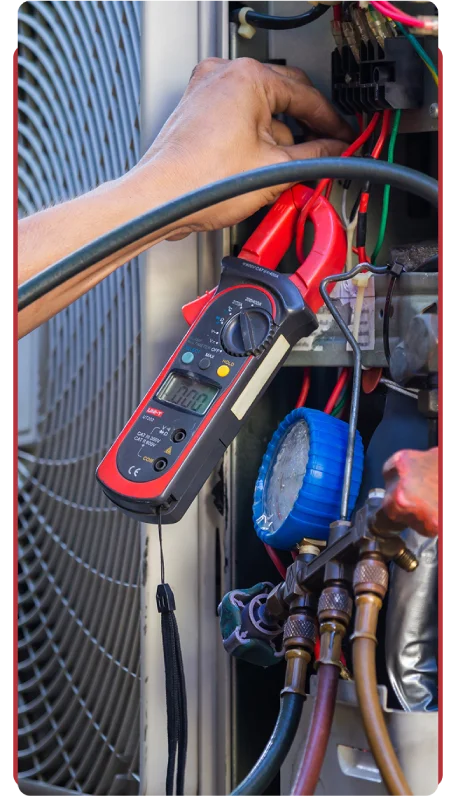
Ductless Cooling & Heating Installation for Lancaster County Homes
No ductwork. No messy renovation. No forced choice between comfort zones. A mini-split system brings precision comfort to the spaces that matter—bedrooms, offices, additions, basements—without tearing open walls or abandoning your existing HVAC investment.
J&G Heating & Air Conditioning installs Fujitsu and Heil mini-split systems with the precision Lancaster County homeowners trust. Our Fujitsu Elite and Heil Elite certified technicians perform thorough in-home assessments, design each system for your home’s exact needs, and commission every installation with full testing and training so you understand exactly how to maximize efficiency and comfort.
Why Lancaster Homeowners Choose J&G Heating & Air Conditioning for Mini-Split Installation
Every home is different, and every installation should be designed specifically for yours. Book a free consultation with one of our technicians—we’ll assess your space, discuss your comfort goals, review equipment options, and answer all your questions about cost, financing, and timeline.
A mini-split sized wrong costs extra dollars every month in wasted energy and under-delivers comfort when you need it. We perform detailed room-by-room analysis—measuring dimensions, assessing insulation quality, accounting for window exposure and usage patterns—to recommend the exact tonnage and configuration your space needs. Oversized systems short-cycle and lose efficiency; undersized systems run constantly and underperform. We get it right, and every customer sees the difference on their utility bill.
We’re certified Fujitsu Elite and Heil Elite dealers, meaning factory training, access to manufacturer-level diagnostics, and warranty coverage that backs every installation. Your system doesn’t just come with a parts warranty—it comes with the confidence that installation was performed per manufacturer specifications by technicians trained by the company that engineered it. When service is needed years from now, your documentation proves proper installation, and warranty claims are handled smoothly.
Mini-splits avoid the noise, dust, and drywall damage of duct installation. We route refrigerant and condensate lines through exterior walls, existing chases, or inconspicuous ceiling paths. Indoor head units mount at eye level on walls or recess into ceilings—no ugly window units, no permanent aesthetic compromise. Your home looks like you invested in comfort, not that you settled for a temporary fix.
Installation doesn’t end when the last screw is turned. We test the system under real heating and cooling loads, balance airflow across zones, program your thermostat with seasonal schedules optimized for your climate, and show you how to operate every feature. Many modern units include app control—we walk you through smartphone setup so you can adjust temperature remotely. You’ll understand exactly how your system works and how to keep it running efficiently.
A mini-split installation is an investment that pays back through years of efficient, comfortable operation. We partner with Wells Fargo, PowerPay, and GoodLeap to make financing flexible and affordable. Your free consultation includes a no-obligation financing review, so you understand monthly costs upfront and can make a confident decision.
Our installation doesn’t create new problems. Every mini-split we install comes with responsive emergency support (Mon–Sun, 6:00 AM–10:00 PM, after-hours fee applies)—if something unexpected happens in the first days or weeks, we respond quickly. And because we installed it, we understand your system’s design, performance baseline, and common failure modes, making troubleshooting fast and effective.
Our Service Areas
Service Areas for Mini-Split Installation in Lancaster County
We install mini-split systems across Lancaster County with full expertise and rapid response:
Communities We Serve:
Our home base with full mini-split installation, maintenance, and repair service. Scheduling based on your preference for estimates and installations. More about Lancaster mini-split service →
10 minutes away; experienced installation crews and ongoing support. Complete mini-split installation services with proven track record in the area. More about Denver mini-split service →
Serving families with professional mini-split design and installation. Northeast of Lancaster, covered by our maintenance and emergency response teams. More about Ephrata mini-split service →
Full installation services with proven track record in the area. South of Lancaster on Route 30, convenient scheduling from our central location. More about Columbia mini-split service →
Local installation experts with extensive mini-split experience. North-central Lancaster County, served by our most experienced technicians. More about Lititz mini-split service →
Our Process
Our Mini-Split Installation Process
Every mini-split installation we do follows the same proven process — designed to deliver right-sized equipment, professional workmanship, and a system that performs from day one. Tap any step below to see exactly what happens.
Every mini-split installation begins in your home, not in a catalog. We visit each space you want to condition and gather the information that drives our recommendation. We measure room dimensions, assess insulation quality by visual inspection, note window count and orientation (south-facing windows load differently than north-facing), evaluate air sealing condition around doors and electrical outlets, and discuss how each room is actually used. A spare bedroom used seasonally has different needs than a home office where someone works eight hours daily.
We also review your current comfort complaints—hot bedrooms, uneven temperature, high summer bills—so the new mini-split system solves real problems you’ve experienced. This conversation reveals whether a single-zone system (one indoor head for one space) or a multi-zone system (multiple heads on one outdoor condenser) makes sense for your home’s layout.
Visit each space to be conditioned and measure room dimensions, ceiling height, and layout
Assess insulation levels through visual inspection
Document window count, orientation, and shading to understand solar heat gain
Evaluate exterior wall condition and air sealing quality around existing penetrations
Discuss how each space is used and what comfort target you want to achieve
Review current HVAC challenges and seasonal comfort complaints
Identify best locations for indoor unit placement to maximize airflow and minimize noise
Once we understand your home, we calculate the exact cooling and heating capacity (measured in BTU or tons) each space requires. This isn’t guesswork—we use industry-standard sizing methods that account for your room’s specific dimensions, insulation quality, and local Lancaster County climate data. Then we recommend equipment: our primary brands are Heil and Fujitsu, both offering high-efficiency mini-splits with excellent warranties and parts availability across Lancaster County.
We explain efficiency ratings (SEER for cooling, HSPF for heating) so you understand annual operating costs for each equipment tier. We design the complete system layout: where indoor head units will mount for optimal comfort and aesthetics, how refrigerant lines will route to minimize visible tubing, where the outdoor condenser will sit for best performance and lowest noise impact on neighbors, and how condensate will drain safely away from your home’s foundation.
Calculate exact cooling capacity (tonnage) required for each space using room-specific data
Calculate heating capacity if adding heat pump mini-splits for year-round comfort
Compare equipment options: Heil vs. Fujitsu, standard efficiency vs. premium, single-zone vs. multi-zone outdoor condensers
Explain SEER (cooling efficiency) and HSPF (heating efficiency) ratings and impact on annual operating costs
Design complete system layout: indoor head unit locations, outdoor condenser placement, refrigerant line routing, condensate drainage
Discuss aesthetic options: wall-mounted units, ceiling cassettes, floor units, and show examples in similar homes
Identify any structural considerations: where lines can route through walls, whether chases exist, what permits may be required
Provide written estimate with equipment model numbers, specifications, labor timeline, warranty details, and total installed cost
Mini-split installation in Lancaster County may require electrical permits depending on local code. We handle all permitting, coordinate with local building departments, verify equipment delivery timing, and schedule your installation at your convenience. We also notify you of any special preparation needed—ensuring outdoor unit access, confirming placement of the indoor head, protecting furnishings from dust—so installation day runs smoothly.
Pull required electrical permits from Lancaster County and relevant local municipalities
Coordinate inspection scheduling with building officials if required
Verify equipment availability and delivery dates with our suppliers
Schedule installation appointment at your preferred date and time
Confirm any special site preparation needed before installation crew arrives
Installation day arrives with our crew and fully equipped service trucks. We protect your home’s interior and landscaping, then run refrigerant and condensate lines from the outdoor condenser location through exterior walls or existing chases into the space where your indoor head unit will mount. If lines must pass through walls, we drill small holes and seal them carefully to maintain energy efficiency and weatherproofing.
We size all refrigerant lines per manufacturer specifications for your system’s capacity and the distance between outdoor and indoor units. Undersized lines create pressure drop and reduce efficiency; oversized lines waste material and money. We insulate lines with closed-cell foam to prevent energy loss and condensation formation, then pressure-test every joint for leaks using nitrogen gas before any refrigerant enters the system.
Protect interior flooring and furnishings with drop cloths and protective coverings
Run refrigerant and condensate lines through exterior walls or chases with minimal disruption
Drill and seal wall penetrations to maintain air sealing and weather resistance
Size all copper refrigerant lines per manufacturer specifications for your system capacity and distance
Braze all connections permanently to ensure leak-proof operation for 15+ years
Insulate refrigerant lines with closed-cell foam to prevent energy loss and condensation
Pressure-test all joints using nitrogen at manufacturer specifications before any refrigerant charge
We mount the indoor head unit on your wall at optimal height for comfortable airflow without drafts, or we recess it into the ceiling if that’s your preference. The unit is securely fastened, vibration-isolated to minimize transmission of compressor noise into your home, and properly drained so condensate flows away from the unit and toward the drain line we’ve already installed.
If your mini-split is part of a multi-zone system (multiple indoor heads on one outdoor condenser), we install all head units and ensure each one has independent temperature control through its remote control or smartphone app. We also verify that refrigerant distribution and airflow is balanced across zones so no single space dominates the system’s capacity.
Mount indoor head unit on wall or recess in ceiling at optimal height for airflow and comfort
Secure unit firmly and install vibration-isolation pads to minimize compressor noise transmission
Connect condensate drain line with proper slope so water flows away from the unit without pooling
Install or connect all head units in multi-zone systems with proper refrigerant distribution
Verify airflow balance so each zone receives appropriate cooling or heating capacity
Test all head unit functions: mode switching, fan speed control, temperature settings
The outdoor condenser is positioned on a level, stable surface—either a new concrete pad if needed, or an existing pad that we inspect for integrity. We position the unit away from direct afternoon sun (which reduces cooling efficiency), high winds (which can reduce heat pump efficiency and create noise), and bedroom windows (to minimize noise impact on neighbors). We secure the unit firmly using vibration-damping pads and anchors so it doesn’t shift during operation.
We then complete all electrical work per local code: running properly-sized wire from your electrical panel to the outdoor unit, installing a dedicated circuit breaker, connecting the thermostat control line, and testing all connections for proper voltage and continuity. We verify that safety controls—high-pressure cutoff, low-pressure cutoff, thermal overload—are functioning correctly so your system is protected against fault conditions.
Position outdoor condenser on level, stable concrete pad away from direct sun, high winds, and bedrooms
Secure unit firmly using vibration-damping pads and anchor bolts
Run properly-sized electrical wire and conduit from electrical panel to outdoor unit per local code
Install dedicated circuit breaker and disconnect switch
Connect thermostat control line for temperature control and mode switching
Test all electrical connections for proper voltage (240V), continuity, and grounding
Install and test all safety control systems: high-pressure switch, low-pressure switch, thermal overload
Verify that high-pressure lines (outside the home) are insulated and routed safely away from traffic
This is the most critical technical step. We evacuate all air and moisture from the refrigerant lines and components using a vacuum pump, pulling a deep vacuum over several minutes to ensure every trace of non-refrigerant gas is removed. (Moisture and air inside refrigerant systems cause chemical reactions that damage compressors and reduce efficiency—this step is not skipped.) We then charge the system with the exact refrigerant type and quantity your equipment requires, using scales to verify weight and monitors to track pressure.
We run the system in both heating and cooling modes under load, measuring refrigerant pressures on both the high-pressure (outdoor) and low-pressure (indoor) sides. We calculate superheat and subcooling values to verify that charge is correct—too little refrigerant and the system can’t deliver capacity; too much and the compressor overheats. We measure temperature at various points in the system and compare against manufacturer performance curves to ensure everything is operating within specification.
Evacuate all air and moisture from the system using a vacuum pump
Pull vacuum to the manufacturer’s specification (typically 500–1000 microns) and hold for 15+ minutes to ensure all non-refrigerant gas is removed
Charge system with correct refrigerant type and quantity using calibrated scales
Measure high-side and low-side refrigerant pressures under heating and cooling load
Calculate superheat and subcooling to verify refrigerant charge is correct
Test system performance in both heating and cooling cycles under real temperature conditions
Measure temperature differential across indoor and outdoor units to verify proper heat transfer
Before we leave, we run the system through complete heating and cooling cycles. We measure airflow (CFM—cubic feet per minute) at each indoor unit’s vents to ensure balanced temperature throughout each space. We program your thermostat with seasonal schedules optimized for your climate—setback during work hours or nighttime saves energy without sacrificing comfort when you’re home.
If your mini-split has smartphone app control, we walk you through downloading the app, connecting it to your system, and using remote temperature control. We explain filter maintenance (how often to clean or replace filters based on your air quality), seasonal adjustments (shifting refrigerant settings between heating and cooling seasons), and what normal operation sounds like so you recognize if something’s wrong. You’ll receive complete documentation: equipment model numbers and serial numbers, warranty information, commissioning test results showing system performance, service records, seasonal maintenance schedules, and our emergency contact number. Any questions in the first weeks—thermostat settings, how to interpret error codes on the display, why the system runs a defrost cycle on cold days—are answered by the same technician who installed it.
Measure airflow (CFM) at each indoor unit to confirm balanced temperature throughout spaces
Run full heating cycle test and measure capacity and comfort in all zones
Run full cooling cycle test and measure capacity and comfort in all zones
Program thermostat with seasonal schedules optimized for Lancaster County climate
Demonstrate all features: temperature setpoints, mode switching (heating/cooling/fan-only), schedule programming, emergency settings
Connect smartphone app (if available) and demonstrate remote control capability
Explain filter maintenance: cleaning intervals based on your home’s air quality and usage
Explain seasonal adjustments and when to shift refrigerant settings
Review heating efficiency targets and cooling targets so you recognize normal operation vs. problems
Leave complete documentation: equipment specs, serial numbers, warranty terms, commissioning test results, service contact info
Answer all questions about operation and provide your personal technician contact number for follow-up support
We Service all of the Industries Top Equipment and Install these Trusted Brands
Make Your Comfort Upgrade Affordable with Flexible Financing Options
We believe every homeowner in Lancaster County deserves access to reliable heating and cooling — regardless of budget. That’s why J&G Heating & Air Conditioning partners with trusted financing providers to offer flexible payment plans that fit your financial situation. Whether you’re replacing an aging boiler, upgrading to a high-efficiency air conditioning system, installing a high-efficiency heat pump, or investing in a new generator system, financing allows you to enjoy the comfort you need today while spreading payments over time.
Our team will walk you through every available option during your free estimate, helping you understand monthly payment amounts, interest rates, and approval requirements. We want the financial side of your project to feel just as comfortable as the temperature in your home.
What Are the Benefits of Financing?
Keep your emergency fund intact while still investing in a high-quality HVAC system. Financing lets you upgrade your comfort without depleting your savings account, giving you financial flexibility and peace of mind.
Don’t wait for your next paycheck or tax return. With financing in place, you can replace an aging system or upgrade today — and start enjoying reliable comfort right away.
Financing puts higher-efficiency equipment within reach. Better systems mean lower energy bills, longer equipment life, and more reliable comfort — benefits that pay off year after year.
Fixed monthly payments make it easy to budget for your project. No surprises, no hidden fees — just a clear path to comfort that fits your household’s finances.
Wells Fargo
As an authorized Wells Fargo financing partner, J&G Heating & Air Conditioning offers a range of credit options to help you manage the cost of your new heating or cooling system. With competitive rates and flexible terms, qualifying homeowners can enjoy convenient monthly payments that fit comfortably into their household budget.
Through our partnership with PowerPay, we provide another trusted financing pathway for Lancaster County homeowners ready to upgrade their home comfort. PowerPay’s streamlined application process and flexible repayment plans make it easy to get started on your project without delay.
GoodLeap offers flexible financing options and competitive rates, making it easy for homeowners to invest in high-efficiency heating, cooling, and generator systems. With a simple application process and a variety of repayment terms, upgrading your home comfort doesn’t have to mean a large upfront cost.
When you join one of our maintenance programs, you’ll receive scheduled tune-ups performed by our NATE-certified technicians who know your system inside and out. We’ll clean critical components, check refrigerant levels, inspect electrical connections, test safety controls, and ensure everything is operating as it should.
Regular maintenance doesn’t just prevent breakdowns — it also helps lower your energy bills and protects your manufacturer warranty coverage. It’s one of the smartest investments you can make in your home’s comfort and your family’s safety.
Our Maintenance Plans Include:
Receive professional inspections and tune-ups for your heating and cooling systems each year, ensuring your equipment is ready before the season’s first extreme temperature day.
As a maintenance plan member, your service requests jump to the front of the line — so you spend less time waiting on a fix and more time enjoying a comfortable home.
A clean, well-tuned system uses less energy to deliver the same comfort. Members typically see lower monthly utility bills and a smaller carbon footprint year-round.
Catching small issues early prevents major breakdowns and extends the life of your HVAC equipment — protecting both your comfort and your investment.
A single-zone system has one outdoor condenser and one indoor head unit for one room. A multi-zone system has one condenser with multiple indoor head units in different spaces, each independently controlled. Multi-zone systems let you condition multiple rooms without central AC’s cost and disruption. Each zone operates independently, so you’re not wasting energy cooling or heating unused spaces.
Installation typically takes one to three days depending on system complexity. A single-zone system in a home with accessible walls or chases might be completed in one day. A multi-zone system or a home requiring complex line routing takes longer. We provide a realistic timeline during your consultation and schedule around your convenience.
Refrigerant lines will be visible between the outdoor condenser and your home’s exterior wall, but we route them along existing structures (under roof eaves, down the side of a wall, through downspout channels) to minimize visual impact. Lines entering the wall are run through a small drilled hole that we seal. Interior lines are hidden inside walls or chases. Modern mini-split installations look clean and professional, not like a window AC retrofit.
Mini-split installation requires EPA certification for handling refrigerants, proper brazing of copper joints, electrical work per local code, and specialized tools for evacuation and charging. Improper installation voids warranties, reduces efficiency, and creates safety risks. Installation must be performed by certified technicians—J&G Heating & Air Conditioning handles every step and provides documentation for warranty purposes.
Yes. Multi-zone systems are modular. If your outdoor condenser has capacity, we can often add another indoor head unit to an existing system. We’ll assess the condenser size and current load to determine if expansion is possible or if a second outdoor unit makes more sense. Planning for future expansion during your initial consultation helps us recommend the right equipment size.
Modern mini-splits typically use R-32 or R-410A refrigerant, depending on the model. Some older units use R-22. We verify your system’s refrigerant type during installation and maintain documentation so future technicians know exactly what refrigerant your system requires. EPA regulations restrict handling and disposal of certain refrigerants, which we manage responsibly.
Mini-splits require 240V electrical service and a dedicated circuit breaker, which most homes already have capacity for. During your consultation, we assess your electrical panel and let you know if an upgrade is needed. If your panel is full or outdated, electricians we work with can handle upgrades—we’ll budget that into your estimate.
Yes. Mini-split outdoor condensers run at lower noise levels than window units or traditional central AC compressors, especially at part-load (which is typical). Indoor head units run very quietly—19–26 decibels, roughly the sound of a quiet refrigerator. Proper placement away from bedrooms and living areas ensures noise is never an issue. During your consultation, we discuss unit placement to achieve your noise comfort goals.
Minimal maintenance is required. You’ll clean or replace filters monthly during heavy-use seasons and twice yearly during light-use periods. Once yearly, a professional technician should inspect and clean the outdoor coil and check refrigerant pressure to ensure the system is operating at peak efficiency. We include maintenance guidance and can schedule annual tune-ups as part of our service plans.
We’re Fujitsu Elite and Heil Elite certified dealers with 29 years serving Lancaster County. Our technicians hold NATE certification and perform thorough in-home assessments for each home. We handle every step from design through commissioning and offer responsive emergency support (Mon–Sun, 6:00 AM–10:00 PM, after-hours fee applies) backed by our warranty.
Let’s Get Started
Ready to Install Ductless Comfort in Your Home?
Mini-split installation delivers comfort where you need it without the cost, disruption, and energy waste of traditional ductwork. Whether you’re cooling a bedroom addition, creating a comfortable office space, finishing a basement, or upgrading your whole-home comfort system, J&G Heating & Air Conditioning brings nearly 30 years of expertise and Fujitsu Elite / Heil Elite dealer status to every project.
Our certified technicians perform thorough in-home assessments, design systems that match your home’s exact needs, and install with precision so every dollar spent on equipment translates to efficient, reliable comfort. We handle permitting, coordinate with local building departments, and stand behind every installation with warranty support and responsive emergency coverage.