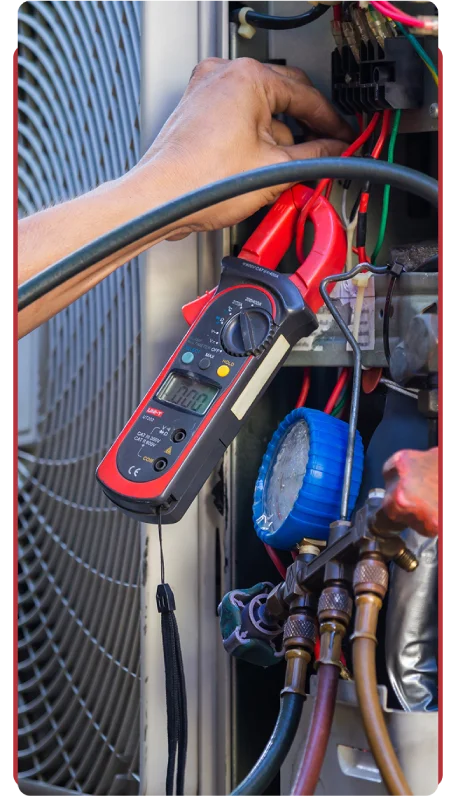
High-Efficiency Boiler Installation for Radiant & Hydronic Heating
A modern boiler delivers consistent warmth through radiant floor loops, baseboard radiators, or steam distribution—with lower operating costs, quiet operation, and comfort that forced-air heating simply cannot match. J&G Heating & Air Conditioning specializes in boiler installation for Lancaster County homes, installing Burnham, US Boiler, New Yorker, and Bradford White systems with NATE-certified technicians who understand radiant heating design and hydronic system balancing.
Why Lancaster Homeowners Choose J&G Heating & Air Conditioning for Boiler Installation
When you’re investing in a new boiler system, the contractor matters as much as the equipment. Our experience, manufacturer certifications, and family-owned service all add up to one thing: a boiler installation done right the first time, backed by people who’ll be here for tune-ups and future repairs when you need them.
Schedule Your Boiler Installation Consultation
Get a free, no-pressure estimate. Our technicians will assess your home’s heating needs, evaluate your existing distribution system, explain equipment options, and provide a detailed quote.
What Sets Our Boiler Installation Apart?
A boiler installation is not just dropping a tank in the basement—it requires designing the complete water distribution system. We size the boiler to your home’s actual heat demand, select the right circulation pump for your system’s flow rate, install expansion tanks to manage water pressure safely, and balance radiators or radiant loops so every room reaches your setpoint temperature without cold spots or overheating. Poor system design leaves some rooms chilly while others overheat. We design it right the first time.
Nearly three decades installing boilers for Lancaster County families means we’ve learned what equipment performs through Pennsylvania winters, how radiant systems interact with humidity and comfort, and how to troubleshoot hydronic problems when they arise. We’re not installers who treat boilers as a side service—radiant and steam heating is core expertise. Your neighbors have boilers we installed and maintain.
Our technicians hold NATE certification that verifies expertise in boiler pressure controls, water quality management, gas line safety, thermal expansion, circulation balancing, and hydronic piping codes. NATE certification for hydronic heating requires comprehensive exams covering equipment, safety, and system design. We install boilers to code—with proper pressure relief, water conditioning, circulation, and venting—so your system operates safely year after year.
A boiler sized for your home’s actual heating load avoids short-cycling (frequent on/off that wastes energy and creates temperature swings) and undersizing that leaves you cold. The circulation pump must move the right volume of water at the right pressure—too weak and radiators won’t heat; too strong and flow noise irritates occupants. We calculate exact capacity requirements and select equipment that balances efficiency with comfort.
Hard water and corrosive minerals shorten boiler life and reduce efficiency. During installation, we assess your water supply, recommend inhibitors or treatment if needed, flush systems properly, and commission the boiler with cleaned water. We document water chemistry so future service technicians understand your system’s history. Proper water quality management extends boiler life by years and prevents costly repairs.
Winter heating failures are emergencies. Emergency service is available Monday–Sunday, 6:00 AM–10:00 PM (after-hours fee applies), and because we designed and installed your boiler system, we understand its exact configuration, controls, and typical failure modes. Emergency calls are diagnosed and resolved quickly so you’re never without heat on a winter night.
Our Service Areas
Boiler Installation Service Areas Across Lancaster County
J&G Heating & Air Conditioning installs boilers throughout Lancaster County from our Conestoga headquarters. Each community receives the same precision installation workmanship, comprehensive commissioning, and responsive emergency support. Our service network spans the heart of Lancaster County, where we’ve spent nearly three decades installing and maintaining boiler systems for thousands of families.
Communities We Serve:
Full-service boiler installation with complete hydronic system design, equipment selection, and ongoing maintenance. Our primary market. Same-day emergency support and quick scheduling for estimates. More about Lancaster boiler service →
Complete boiler installation and seasonal maintenance service. Just 10 minutes east of our office, enabling fastest response times in the county. Experienced technicians handle installation and follow-up service. More about Denver boiler service →
Professional boiler installation with detailed system sizing and hydronic commissioning. Northeast service area. Comprehensive post-installation support and seasonal tune-ups. More about Ephrata boiler service →
Expert boiler installation with complete distribution system assessment and balancing. South of Lancaster on Route 30. We service and maintain all systems we install. More about Columbia boiler service →
High-efficiency boiler installation and seasonal commissioning. North-central Lancaster County. Community-focused service with consistency in installation and follow-up maintenance. More about Lititz boiler service →
Our Process
Our Boiler Installation Process
Every boiler installation we do follows the same proven process — designed to deliver right-sized equipment, professional workmanship, and a system that performs from day one. Tap any step below to see exactly what happens.
Installing a boiler starts with understanding your home’s heating needs and evaluating whether you’re upgrading an existing hydronic system or converting from forced-air heating. We walk through your home with you to review square footage, ceiling height, insulation, window placement, basement or crawlspace conditions, and the spaces that need heat.
We evaluate your existing distribution system: if you have baseboard radiators or radiant floor loops, we inspect them for corrosion, sizing adequacy, and proper pitch (hydronic systems must slope correctly for air removal and circulation). If you’re converting from forced-air to radiant, we assess the feasibility of installing radiant tubing under your existing flooring or adding baseboard radiators. We also evaluate your water supply (hardness, mineral content) to plan water treatment if needed.
Walk through your home with you and review the spaces that need heat
Inspect existing radiators or radiant loops for corrosion, blockages, and sizing adequacy
Assess water supply quality and recommend conditioning if hard water is present
Evaluate boiler location options: basement, utility room, or attic space
Review your current heating bills to establish a baseline for efficiency improvement
Discuss fuel type (natural gas, propane, or oil) and your preference for boiler technology
Determine if existing distribution system can support new boiler or requires upgrades
Once we understand your heating needs, we recommend the exact boiler capacity (measured in BTU output) your home requires. Our primary brands are Burnham, US Boiler, New Yorker, and Bradford White—all offer high-efficiency condensing boilers with excellent warranties and robust parts availability across Lancaster County. We explain AFUE ratings (Annual Fuel Utilization Efficiency) and the long-term operating cost difference between a 95%-AFUE condensing boiler and older 80%-AFUE models.
We design the complete hydronic system: where the boiler will sit, how supply and return piping will run, what size expansion tank is needed (critical for safety under pressure), which circulation pump will provide adequate flow without noise, where baseboard radiators or radiant loops will connect, and how the system will drain safely for winter shutdown or maintenance. We select the right pressure relief valve, low-water cutoff, and temperature/pressure gauges so the system operates within safe limits.
Calculate exact boiler capacity (BTU output) needed for your home’s heating demand
Select circulation pump sized for your system’s flow rate and pressure requirements
Specify expansion tank volume to safely manage thermal expansion as water heats
Design complete piping layout: supply main, return main, radiator branches or radiant zones
Plan radiant tubing layout if installing underfloor heating (spacing, loops, manifold location)
Specify baseboard radiator sizes and quantities if using that distribution method
Select pressure relief valve, low-water cutoff, and temperature/pressure controls
Identify any piping upgrades needed and plan installation sequence
Review financing programs and research available rebates and incentives
Provide written estimate with equipment specifications, labor, timeline, warranty, and total cost
Boiler installation in Lancaster County requires gas, plumbing, and sometimes electrical permits. We pull all necessary permits, coordinate with local building authorities and utility companies, and ensure inspections are scheduled at the right times. We notify you of any special preparation—clearing access to the boiler installation area, ensuring water and gas line access, protecting furnishings from construction dust—so installation proceeds smoothly.
Pull required gas, plumbing, and HVAC permits from Lancaster County and local jurisdictions
Coordinate inspection scheduling with local building officials
Contact utility company if gas meter relocation or gas line work is needed
Verify equipment delivery dates and schedule installation appointment
Arrange safe disposal of your old boiler through responsible recycling partners
Plan water system flush procedures and obtain any water treatment chemicals needed
Notify neighbors if work may cause temporary service disruptions
Installation day begins with safe removal of your old boiler. We drain the system completely, disconnect the gas supply at the meter or tank, remove all electrical connections, and disconnect supply and return piping. Old boilers are hauled away same-day through our recycling partners. We protect your basement or utility room—laying drop cloths, containing debris, clearing pathways—and inspect the installation area for any structural issues the new boiler must accommodate.
Safely drain the boiler and distribution system, disposing of water according to code
Shut off gas supply and verify it’s isolated at the meter or tank
Disconnect electrical power and test that no current flows to the old boiler
Disconnect all supply and return piping connections
Safely remove the old boiler using proper lifting techniques and equipment
Clean up all debris and haul away old equipment same-day
Inspect the installation area for structural issues, water damage, or clearance concerns before placing new boiler
We position the new boiler in its designated location—basement, utility room, or attic—ensuring adequate clearance for servicing, air intake, and vent routing as required by code. We connect the expansion tank, circulation pump, pressure relief valve, and all controls before connecting the boiler to the supply and return mains. Each connection is pressure-tested to confirm no leaks.
If radiators or radiant loops need upgrades or new installation to match the boiler’s output, we make those modifications and balance the system so every radiator receives adequate flow. Unbalanced systems overheat some rooms while leaving others cold.
Position new boiler securely in its installation location with proper clearance for service access
Install expansion tank sized for your system’s thermal expansion
Connect circulation pump with proper inlet/outlet orientation for reliable flow
Install pressure relief valve, low-water cutoff, and temperature/pressure gauges
Pressure-test all connections to confirm no leaks before running water through system
Connect supply and return piping from boiler to distribution system (radiators or radiant loops)
Verify circulation pump moves water at correct flow rate through all radiators
Balance radiator valves so each reaches setpoint temperature without overheating or underperforming
We connect the new boiler to your home’s gas supply using properly-sized pipe and approved connections. All gas lines are pressure-tested to ensure no leaks—gas leaks are hazards and must be detected early. We install a new gas shutoff valve at the boiler and verify that the safety controls—low gas pressure switch, high limit switch, and gas burner ignition system—are functioning correctly.
Gas combustion inside the boiler produces carbon monoxide (CO), which must be safely exhausted outside. We verify that the boiler’s draft safety controls operate correctly to ensure CO never backs up into your home.
Connect boiler to gas supply with properly-sized pipe per code requirements
Pressure-test all gas line connections using nitrogen gas to confirm no leaks
Install gas shutoff valve and verify it operates freely
Install and test safety controls: pressure switches, flame detection, burner ignition
Perform combustion analysis on the boiler to confirm proper gas mixture and heat output
Test boiler draft to confirm safe exhaust venting and no CO backup risk
Boiler electrical installation must meet local code and include proper circuit breakers, disconnect switches, wire sizing, and connections. We test all electrical connections for proper voltage and continuity, and verify that the thermostat communicates correctly with the boiler controls. We also install safety devices—high-limit switches that prevent dangerous overheating, low-water cutoffs that prevent dry-firing—and test their operation before powering up the system.
Install electrical circuit breaker and disconnect switch per local code
Run properly-sized wire and conduit from electrical panel to boiler
Verify proper voltage (120V or 240V depending on boiler type) at all connections
Test electrical continuity and grounding integrity
Install and test safety control devices: high-limit switch, low-water cutoff, flame rollout protection
Connect thermostat control wiring and verify communication with boiler controls
Test all safety interlocks to confirm system shuts down safely if problems develop
Boilers require safe venting of combustion exhaust to the outside. We inspect the existing chimney for damage, blockages, or improper sizing and clean it thoroughly if suitable. If we’re installing a power-vent or direct-vent system, we run new venting pipes from the boiler to the exterior, ensuring proper slope and secure fastening. We test draft to confirm that boiler exhaust safely exits to the outside and does not back up into your home.
Inspect existing chimney or plan new venting route for safe exhaust
Install or connect boiler vent pipe with proper slope to prevent condensate pooling
Secure all vent connections and inspect for leaks
Perform draft test to confirm positive venting and no CO backup risk
Test boiler draft safety controls to confirm reliable operation
Before we leave, the boiler is powered up, cycled through heating mode, and tested for proper operation. We measure boiler output temperature, confirm the circulation pump circulates water properly, verify the thermostat controls temperature accurately, and test all safety controls. We show you how to use the thermostat, explain water pressure maintenance, discuss seasonal maintenance, and walk you through the warranty so you understand coverage and exclusions.
You’ll receive complete documentation: boiler model number and serial number, warranty cards, installation completion certificate, gas and electrical inspection reports, system commissioning records documenting water chemistry, and our emergency contact information. Any questions during your first heating season are answered by the technician who installed the system.
Perform system startup and confirm boiler powers up and cycles properly
Measure boiler output temperature to verify proper heat output
Verify thermostat communicates with boiler controls and adjusts temperature correctly
Test circulation pump flow rate to confirm adequate water movement through all radiators
Test all safety controls: limit switches, low-water cutoff, pressure relief, draft control
Document water chemistry (pH, hardness) if water treatment was required
Make Your Comfort Upgrade Affordable with Flexible Financing Options
We believe every homeowner in Lancaster County deserves access to reliable heating and cooling — regardless of budget. That’s why J&G Heating & Air Conditioning partners with trusted financing providers to offer flexible payment plans that fit your financial situation. Whether you’re replacing an aging boiler, upgrading to a high-efficiency air conditioning system, installing a high-efficiency heat pump, or investing in a new generator system, financing allows you to enjoy the comfort you need today while spreading payments over time.
Our team will walk you through every available option during your free estimate, helping you understand monthly payment amounts, interest rates, and approval requirements. We want the financial side of your project to feel just as comfortable as the temperature in your home.
What Are the Benefits of Financing?
Keep your emergency fund intact while still investing in a high-quality HVAC system. Financing lets you upgrade your comfort without depleting your savings account, giving you financial flexibility and peace of mind.
Don’t wait for your next paycheck or tax return. With financing in place, you can replace an aging system or upgrade today — and start enjoying reliable comfort right away.
Financing puts higher-efficiency equipment within reach. Better systems mean lower energy bills, longer equipment life, and more reliable comfort — benefits that pay off year after year.
Fixed monthly payments make it easy to budget for your project. No surprises, no hidden fees — just a clear path to comfort that fits your household’s finances.
Wells Fargo
As an authorized Wells Fargo financing partner, J&G Heating & Air Conditioning offers a range of credit options to help you manage the cost of your new heating or cooling system. With competitive rates and flexible terms, qualifying homeowners can enjoy convenient monthly payments that fit comfortably into their household budget.
Through our partnership with PowerPay, we provide another trusted financing pathway for Lancaster County homeowners ready to upgrade their home comfort. PowerPay’s streamlined application process and flexible repayment plans make it easy to get started on your project without delay.
GoodLeap offers flexible financing options and competitive rates, making it easy for homeowners to invest in high-efficiency heating, cooling, and generator systems. With a simple application process and a variety of repayment terms, upgrading your home comfort doesn’t have to mean a large upfront cost.
When you join one of our maintenance programs, you’ll receive scheduled tune-ups performed by our NATE-certified technicians who know your system inside and out. We’ll clean critical components, check refrigerant levels, inspect electrical connections, test safety controls, and ensure everything is operating as it should.
Regular maintenance doesn’t just prevent breakdowns — it also helps lower your energy bills and protects your manufacturer warranty coverage. It’s one of the smartest investments you can make in your home’s comfort and your family’s safety.
Our Maintenance Plans Include:
Receive professional inspections and tune-ups for your heating and cooling systems each year, ensuring your equipment is ready before the season’s first extreme temperature day.
As a maintenance plan member, your service requests jump to the front of the line — so you spend less time waiting on a fix and more time enjoying a comfortable home.
A clean, well-tuned system uses less energy to deliver the same comfort. Members typically see lower monthly utility bills and a smaller carbon footprint year-round.
Catching small issues early prevents major breakdowns and extends the life of your HVAC equipment — protecting both your comfort and your investment.
A condensing boiler captures heat from exhaust gases that older boilers waste, achieving 95%+ efficiency compared to 80% AFUE on older models. Condensing boilers produce condensate (water) that must drain safely. Standard boilers are less efficient but may suit some applications. We recommend condensing boilers for maximum efficiency and lowest operating costs.
Installation typically takes one to two full days depending on system complexity. If extensive piping modifications or radiant floor installation is required, installation may extend longer. We schedule around your availability and communicate timing clearly.
Boiler size depends on your home’s heating needs—square footage, insulation, window count, and distribution system type (radiant vs. baseboard). We assess these during the in-home consultation to determine the right BTU output. Oversized boilers short-cycle and waste energy; undersized units underperform.
Radiant heating distributes warmth evenly across your home, eliminates hot and cold spots, operates quietly without fans or ductwork, and allows individual room temperature control. Many homeowners find radiant heating the most comfortable heating method available.
Converting forced-air to radiant is feasible in many homes. Radiant tubing can be installed under existing flooring (if there’s access underneath) or you can use baseboard radiators alongside your new boiler. We evaluate your home’s structure and discuss options during the estimate.
Most residential boiler systems operate at 12–20 PSI (pounds per square inch). The expansion tank maintains pressure as water heats. We set your system to the manufacturer’s recommended pressure and train you to monitor the gauge. If pressure rises excessively, the relief valve opens to protect the system.
We specialize in Burnham, US Boiler, New Yorker, and Bradford White boilers and install other quality equipment. All units are high-efficiency models with strong warranties and local parts availability throughout Lancaster County.
Yes. We work with Wells Fargo, Power Pay, and Goodleap to offer flexible financing with terms from 24 to 60 months. Discuss financing during your estimate—we can help you explore options that fit your budget.
Manufacturer warranties typically cover equipment for 5–10 years depending on brand and model. We register your warranty and provide all documentation. Extended service agreements are available if you want additional coverage beyond the manufacturer’s standard terms.
Call us immediately at 717-872-6994. Emergency service is available Mon–Sun, 6:00 AM–10:00 PM (after-hours fee applies) and we’ll dispatch a technician right away. Because we installed your boiler, we understand its exact configuration and can diagnose and resolve issues quickly and efficiently.
Ready to Install Efficient Radiant Heating?
Ready to Install Efficient Radiant Heating?
A modern boiler delivers consistent warmth, comfortable radiant heat, and lower operating costs than older forced-air systems. When you choose J&G Heating & Air Conditioning, you’re choosing a family-owned company that’s installed boilers for thousands of Lancaster County neighbors over nearly three decades. We design hydronic systems correctly, stand behind our work, and care about your home’s heating as much as you do.
Our maintenance plans keep your new boiler running efficiently. After installation, join our maintenance plan for annual tune-ups, priority repairs, and discounts on service calls. Explore our maintenance plans to protect your investment.