Keep Your Tankless Water Heater Efficient & Reliable Year-Round
Your tankless water heater delivers on-demand hot water around the clock—but mineral buildup, sediment accumulation, and normal wear gradually reduce efficiency and increase failure risk. Annual maintenance is the single most effective way to prevent costly emergency repairs and extend system life past 20 years. J&G Heating & Air Conditioning provides comprehensive tankless maintenance across Lancaster County: descaling to remove mineral scale, inlet filter replacement, system inspection, and performance testing. One tune-up per year costs $150–300 and prevents emergency repairs costing $500+.
Hard water minerals accumulate inside the heat exchanger over time, creating scale deposits that restrict water flow and reduce heat transfer efficiency. Scale buildup causes several problems: the unit works harder to deliver hot water (wasting energy), outlet water temperature becomes inconsistent (the modulating burner can’t compensate), and eventually scale triggers error codes or complete shutdown. Professional descaling dissolves these deposits using food-safe, manufacturer-approved solutions. We circulate descaling fluid through the heat exchanger for 45–60 minutes per manufacturer procedure, then flush thoroughly with clean water. Annual descaling in hard water areas (most of Lancaster County) prevents this degradation and maintains design efficiency.
Sediment particles in incoming water—rust, sand, debris from municipal pipes—accumulate in the inlet screen over time. A clogged inlet filter restricts water flow, triggers low-flow error codes, and forces the unit to work harder. Annual filter replacement (or more often in areas with sediment-heavy water) is simple maintenance that prevents system stress. We inspect the filter at every visit, replace it as needed, and discuss replacement frequency based on your water supply quality.
A thorough annual inspection examines all critical systems: gas connections for leaks or corrosion, venting for blockages or improper slope, water lines for micro-leaks, electrical connections for corrosion, and display/control systems for accuracy. We perform pressure tests on gas lines, flow tests on water supply, and thermal tests on outlet temperature. Early detection of a loose fitting, corroded electrode, or failing sensor prevents the failure that requires emergency dispatch outside regular business hours.
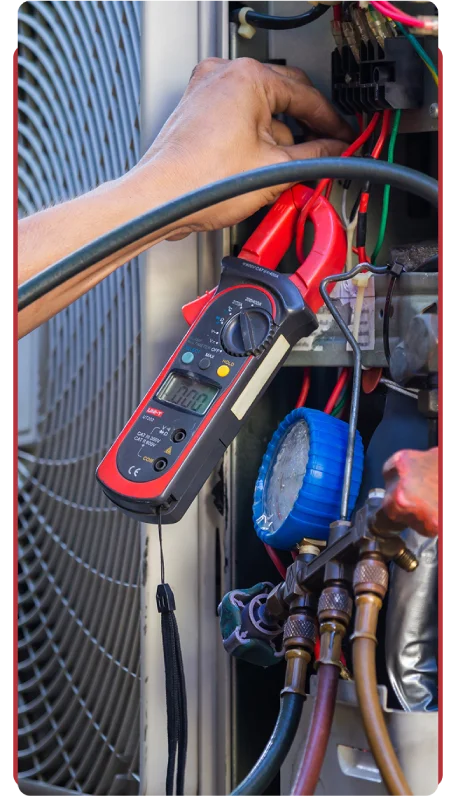
We don’t just inspect; we measure. We test gas pressure and compare it to manufacturer specification. We measure water inlet pressure and outlet temperature. We verify the modulating burner responds smoothly to demand changes. We confirm no error codes are stored in memory. Performance metrics tell us whether your system is running efficiently or trending toward failure. If measurements show degradation, we recommend service before breakdown occurs.
Our technicians complete manufacturer training on Bradford White, Rheem, Navien, and other common tankless brands. That training means we understand each brand’s specific maintenance protocols, the correct descaling procedure, proper filter replacement, and calibration of sensors. We follow manufacturer recommendations exactly—not generic “HVAC maintenance” routines.
Annual maintenance averages $150–300. Emergency repair for mineral scale causing complete shutdown, a failed igniter, or a gas valve problem runs $400–800+. Maintenance is insurance: one modest upfront cost prevents multiple expensive emergency calls. Customers on our maintenance plan report fewer breakdowns and lower annual heating costs overall.
Our Service Areas
Tankless Water Heater Maintenance Across Lancaster County
J&G Heating & Air Conditioning provides annual maintenance service for tankless units across all five communities we serve in Lancaster County. Schedule your tune-up during late summer to prepare for fall and winter heating demands.
Communities We Serve:
Annual maintenance and descaling from our Conestoga headquarters. Same-day scheduling available for tune-ups and emergency service. More about Lancaster tankless service →
Professional tankless maintenance 10 minutes east of our office. Full inspection, descaling, and tune-up service for all major brands. More about Denver tankless service →
Complete annual maintenance service for northeast Lancaster County tankless systems. Descaling specialists with local expertise. More about Ephrata tankless service →
Tankless tune-up and descaling on the Route 30 corridor. Preventive maintenance keeps systems running through peak usage seasons. More about Columbia tankless service →
Annual maintenance and system optimization for north-central Lancaster County homes. Fast scheduling and reliable seasonal tune-up service. More about Lititz tankless service →
We arrive and immediately test your tankless unit: power it on, observe startup, check the display for any stored error codes, and visually inspect all connections. We take a “before” snapshot—current outlet temperature, gas pressure, and water flow—so we can document improvements after maintenance. If the unit is already showing error codes or performance issues, we note these and address them during the tune-up.
Visual inspection of unit exterior, venting, and connections
Power up the system and observe startup sequence
Check display for any stored or current error codes
Measure initial gas pressure at the unit
Measure initial water inlet pressure
Record initial outlet water temperature
Note any customer concerns or unusual sounds
We remove and inspect the inlet water screen or filter. If it shows sediment buildup (discolored, particles visible, or flow restricted), we replace it immediately. Even if the filter looks clean, we replace it if your area has sediment-heavy water or if over a year has passed since the last replacement. A fresh filter ensures maximum water flow and prevents low-flow error codes.
Remove inlet water filter or screen
Inspect for sediment accumulation and blockage
Replace with manufacturer-approved filter if needed
Flush inlet line to clear any residual sediment
Reinstall new filter and verify no leaks at connection
We inspect the entire tankless assembly: gas connections, water supply lines, outlet piping, venting, and mounting brackets. We look for corrosion (white crusty deposits on copper, rust stains on fittings), loose connections (which develop micro-leaks), water marks indicating past leaks, and proper venting slope. We test all connections for tightness and integrity.
Inspect gas line connections for corrosion, loose fittings, or leaks
Check all water connections (inlet, outlet) for tightness and micro-leaks
Inspect venting pipe for blockages, improper slope, or separation
Examine unit mounting brackets for security and corrosion
Check electrical connections (if applicable) for corrosion or loose terminals
Test for any visible gas or water leaks using soapy water test
Improper venting creates serious safety risks. We inspect vent termination: is it clear of debris (bird nests, leaves, ice buildup)? Is the slope correct (minimum 1/4” rise per 1 foot for horizontal runs)? We also perform a draft test—a diagnostic check that confirms exhaust gases are venting safely outdoors and not backdrafting into the home. We verify all vent connections are sealed and not leaking.
Verify vent termination is clear of debris and obstruction
Check vent slope for proper drainage of condensate
Perform draft test to confirm proper exhaust venting
Inspect vent pipe for corrosion, cracks, or separation
Check vent seals for integrity; reseal if needed
Verify no combustion gases are backdrafting into living space
If your area has hard water, professional descaling is essential. We connect a descaling pump to the unit inlet and outlet ports, then circulate food-safe descaling solution (typically citric acid or similar—manufacturer-approved, safe for your home) through the heat exchanger. The solution dissolves mineral deposits accumulated inside, restoring water flow and heat transfer efficiency. This process typically takes 45–60 minutes depending on scale severity and manufacturer procedure. We then flush the system thoroughly with clean water.
Connect descaling pump to unit inlet and outlet ports
Run descaling solution through heat exchanger per manufacturer procedure
Circulate for recommended duration (typically 45–60 minutes)
Monitor pressure and flow during descaling process
Flush system thoroughly with clean water multiple times
Restart unit and verify normal outlet temperature and flow
The flame sensor, water flow sensor, and ignition system are tested and cleaned if needed. Soot or mineral deposits on the flame sensor reduce its sensitivity, which can cause ignition failures. We clean electrodes if needed and test electrical continuity. We verify all safety controls respond correctly: the thermal shutoff, pressure switches, and flow sensor all operate as designed.
Inspect and clean flame sensor electrode if needed
Test flame sensor element for proper resistance value
Inspect spark electrode for corrosion or misalignment
Test ignition control module output voltage
Test gas valve solenoid coil resistance
Verify water flow sensor responds to demand
Test all safety shutoff circuits for continuity
We power up the unit and run it through multiple heating cycles. We verify ignition is strong and reliable, the modulating gas burner responds smoothly to demand, outlet water temperature matches the setpoint, and no error codes appear. We measure final gas pressure and water flow, comparing them to the “before” measurements from Step 1. We run hot water for several minutes to confirm temperature stability.
Power unit and observe startup sequence
Confirm spark and flame establishment at ignition
Verify modulating burner responds smoothly to temperature demand
Measure final outlet water temperature and compare to setpoint
Verify no error codes appear during multiple heating cycles
Test cold water bypass and verify quick hot water delivery
Measure final gas pressure and water flow
Compare final measurements to initial readings to confirm improvement
Before we leave, we provide a brief walk-through: how to recognize warning signs (weak hot water, error codes, unusual sounds), inlet filter replacement frequency (every 12 months in normal water; more often if sediment is heavy), descaling schedule (annually in hard water; every 2–3 years in soft water), and emergency contact procedures. We leave documentation of the service performed—parts replaced, measurements recorded, recommendations for next year.
Explain the maintenance performed and any parts replaced
Demonstrate inlet filter location and replacement procedure
Discuss descaling frequency based on water hardness
Explain how to recognize error codes and warning signs
Provide written maintenance record with measurements and findings
Leave manufacturer manuals and documentation
Provide emergency contact number and dispatch availability
Offer scheduling for next annual maintenance
We Service all of the Industries Top Equipment and Install these Trusted Brands
Make Your Comfort Upgrade Affordable with Flexible Financing Options
We believe every homeowner in Lancaster County deserves access to reliable heating and cooling — regardless of budget. That’s why J&G Heating & Air Conditioning partners with trusted financing providers to offer flexible payment plans that fit your financial situation. Whether you’re replacing an aging boiler, upgrading to a high-efficiency air conditioning system, installing a high-efficiency heat pump, or investing in a new generator system, financing allows you to enjoy the comfort you need today while spreading payments over time.
Our team will walk you through every available option during your free estimate, helping you understand monthly payment amounts, interest rates, and approval requirements. We want the financial side of your project to feel just as comfortable as the temperature in your home.
What Are the Benefits of Financing?
Keep your emergency fund intact while still investing in a high-quality HVAC system. Financing lets you upgrade your comfort without depleting your savings account, giving you financial flexibility and peace of mind.
Don’t wait for your next paycheck or tax return. With financing in place, you can replace an aging system or upgrade today — and start enjoying reliable comfort right away.
Financing puts higher-efficiency equipment within reach. Better systems mean lower energy bills, longer equipment life, and more reliable comfort — benefits that pay off year after year.
Fixed monthly payments make it easy to budget for your project. No surprises, no hidden fees — just a clear path to comfort that fits your household’s finances.
Wells Fargo
As an authorized Wells Fargo financing partner, J&G Heating & Air Conditioning offers a range of credit options to help you manage the cost of your new heating or cooling system. With competitive rates and flexible terms, qualifying homeowners can enjoy convenient monthly payments that fit comfortably into their household budget.
Through our partnership with PowerPay, we provide another trusted financing pathway for Lancaster County homeowners ready to upgrade their home comfort. PowerPay’s streamlined application process and flexible repayment plans make it easy to get started on your project without delay.
GoodLeap offers flexible financing options and competitive rates, making it easy for homeowners to invest in high-efficiency heating, cooling, and generator systems. With a simple application process and a variety of repayment terms, upgrading your home comfort doesn’t have to mean a large upfront cost.
When you join one of our maintenance programs, you’ll receive scheduled tune-ups performed by our NATE-certified technicians who know your system inside and out. We’ll clean critical components, check refrigerant levels, inspect electrical connections, test safety controls, and ensure everything is operating as it should.
Regular maintenance doesn’t just prevent breakdowns — it also helps lower your energy bills and protects your manufacturer warranty coverage. It’s one of the smartest investments you can make in your home’s comfort and your family’s safety.
Our Maintenance Plans Include:
Receive professional inspections and tune-ups for your heating and cooling systems each year, ensuring your equipment is ready before the season’s first extreme temperature day.
As a maintenance plan member, your service requests jump to the front of the line — so you spend less time waiting on a fix and more time enjoying a comfortable home.
A clean, well-tuned system uses less energy to deliver the same comfort. Members typically see lower monthly utility bills and a smaller carbon footprint year-round.
Catching small issues early prevents major breakdowns and extends the life of your HVAC equipment — protecting both your comfort and your investment.
Frequently Asked Questions About Tankless Maintenance
Annual maintenance is ideal. In hard water areas (most of Lancaster County), annual descaling is essential to prevent mineral buildup. In softer water areas, descaling every 2–3 years may be sufficient. Annual inspection catches small problems before they become expensive emergencies.
Annual descaling is a modest service cost that varies with scale severity. One year of preventive maintenance costs far less than a single emergency repair call. We’ll quote your exact price after we look at your unit.
Descaling requires specific equipment (descaling pump), manufacturer-approved solutions, and knowledge of your unit’s exact procedure. DIY descaling risks incomplete scale removal, improper solution concentration, or equipment damage. Professional descaling ensures the job is done correctly per manufacturer specs.
Warning signs include weak hot water output, slower temperature response, or error codes related to low flow (commonly E05, E06). Hard water buildup reduces efficiency gradually, so annual maintenance prevents problems rather than waiting for symptoms.
Yes. We inspect and replace your inlet filter as part of annual maintenance. Replacement frequency depends on sediment in your water supply—typically annually, but more often if water is sediment-heavy.
Full inspection (gas connections, venting, water lines), inlet filter replacement if needed, descaling if hard water is present, sensor cleaning and testing, performance measurements, and complete system checkout. You receive documentation of all work and measurements.
Yes. Descaling removes mineral deposits that reduce heat transfer, so water heats faster using less gas. Clean inlet filters improve water flow. A well-maintained tankless system uses 10–15% less energy than a neglected one and costs less to run.
Absolutely. Tankless units typically last 20–30 years with proper maintenance; unmaintained units often fail by 15 years. Annual tune-ups prevent corrosion, scale accumulation, and component stress that cause early failure.
Emergency service is available Mon–Sun, 6:00 AM–10:00 PM (after-hours fee applies). Call immediately at 717-872-6994 and we’ll dispatch a technician. If you’re on our maintenance plan, emergency service gets priority scheduling.
We offer maintenance plans that bundle annual service with priority repair dispatch. Contact us to discuss plan options that fit your needs.
Let’s Get Started
Prevent Emergency Repairs With Annual Tankless Maintenance
Mineral scale, sediment accumulation, and normal wear gradually reduce your tankless system’s efficiency and reliability. One preventive tune-up per year—costing $150–300—prevents emergency repairs costing $500+. It’s the best investment you can make in system longevity.
Our maintenance includes everything: inlet filter replacement, professional descaling to remove mineral buildup, venting inspection for safety, electrical and sensor testing, complete performance verification, and expert homeowner training on prevention and operation.
J&G Heating & Air Conditioning brings 29 years of expertise to every maintenance visit. We know what breaks, why it breaks, and how to prevent it. Factory training on all major tankless brands means we follow manufacturer procedures exactly, preserving your warranty and ensuring peak efficiency.